
COP30 in Belém:
Was it climate talks or a new colonial disguise in the Amazon?

COP30 in Belém – the 30th UN climate conference – was sold as a historic moment for the planet. For almost two weeks in November, presidents, ministers and experts flew into this Amazonian city at the river’s mouth to once again “negotiate the future of the climate”. On paper that sounded impressive; on the ground it felt different.
In the corridors and on the streets, critical voices from the region cut through the official optimism. Activists, community organisers and social movements from across the Amazon called out the neocolonial attitude that shaped the summit. They accused governments, corporations and big media outlets of treating forest peoples as a colourful backdrop, while decisions about their territories were made elsewhere.
Indigenous and traditional communities were omnipresent in imagery and ceremony. Leaders liked to invoke their land rights, ancestral knowledge and proposals for the forest during speeches and side events. But once negotiations turned into technical language and legal paragraphs, those same communities all but disappeared. Their input rarely made it into binding agreements on forest governance, infrastructure or fossil fuel projects.
The contradiction was painfully visible in projects like the Avenida Liberdade. This 13-kilometre, four-lane road was cut through protected rainforest so convoys and summit traffic could move more smoothly. For logistics companies and political delegations, it meant speed and control. For local residents it meant losing açaí groves, seeing habitats cut up and ecosystems damaged – without any real say, and without meaningful redress.
The same pattern runs through major export corridors, such as the controversial Ferrogrão railway and the creeping privatization of rivers. The projects are amazing for soy and mining companies, but the local communities are left to bear the environmental and social impacts. The natural resources and profit are transferred to the international elites and Amazonian people are left with the risks and damage of their land. This growing colonial extraction has been rightfully criticized by both scientists and activists.
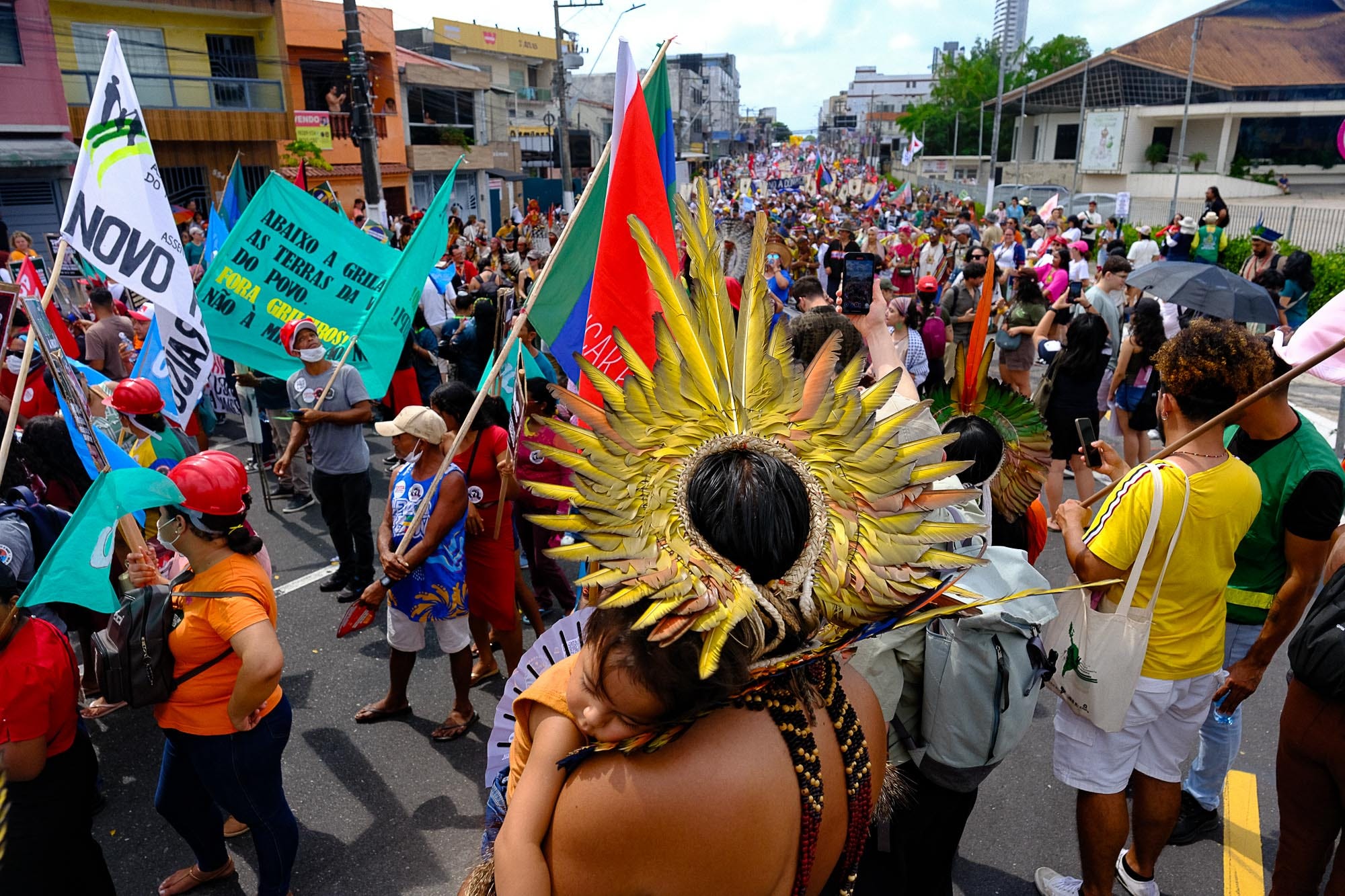
At the same time, local and Indigenous communities did not remain passive. During COP30 they organized mass mobilizations and parallel spaces in Belém. Movements such as the Cúpula dos Povos (“People’s Summit”) brought thousands of people into the streets: Indigenous groups, rubber tappers, riverine communities, and allies from social movements and NGOs. Together they demanded a real say in climate and land policies, with a clear focus on climate justice, territorial rights, and stopping destructive projects like Ferrogrão and new oil exploration.
Their message could not have been clearer: without living forests and fair treatment of local peoples, there can be no real climate solutions. Yet their proposals were barely documented in official outcomes, while large-scale infrastructure and export projects pushed ahead, keeping power firmly in the hands of national and international elites. In the end, despite vibrant protests and strong participation from Amazonian peoples, COP30 in Belém confirmed rather than broke with the old colonial logic.
Further reading on COP30:
C. Cornell Evers – COP30 fails on climate and human rights: fossil fuel lobby once again dictates policy (Dutch)
Amazônia Real - Crise Climática - COP30 (Portuguese)
